
How to Choose a Hospital Delivery Robot: Small vs. Large Models & Real Cost Savings
Walk into the inpatient tower of almost any hospital and you will see the same scene: nurses wheeling carts down corridors, shuttling medications from the pharmacy, carrying lab specimens to the lab, hauling IV bags to the wards. One shift of this “running” work adds tens of thousands of steps — steps that take time away from the bedside.
The numbers behind the problem are sobering:
- A landmark 36-hospital time and motion study of 767 nurses found that medication administration consumed 17.2% of nursing practice time and care coordination another 20.6% — much of it spent on fetching, delivering, and walking between units.
- The CDC estimates that on any given day, about 1 in 31 hospitalized patients acquires at least one healthcare-associated infection — and manually moving supplies and specimens across wards is a documented cross-contamination risk.
- In a 1,500-bed general hospital, in-house logistics can total roughly 12 tons of materials moved per day, handled by 40–60 dedicated staff completing 2,000+ delivery tasks daily.
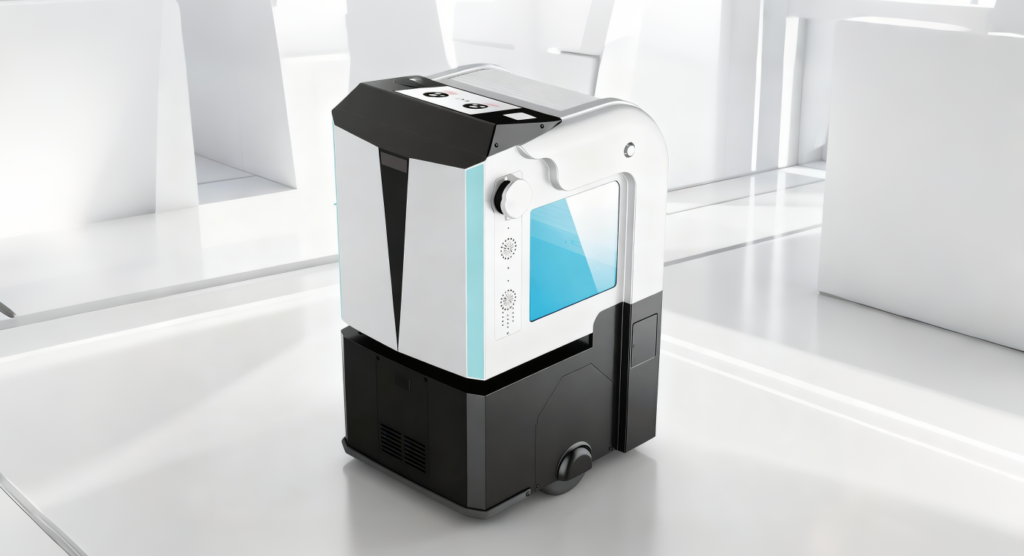
Delivery robots are purpose-built for exactly this kind of “last-mile” work inside hospitals. Fowa Medical manufactures autonomous, closed-cabinet delivery robots that use SLAM laser navigation, avoid people and obstacles on their own, call and ride elevators independently, and return to their charging dock automatically when the battery runs low.
Why Hospitals Are Adopting Delivery Robots
Three problems make manual in-house logistics unsustainable — and all three are solved by automation.
1. Labor costs are rising and hard to sustain. Transport and logistics wages in the U.S. and Europe keep climbing, while recruiting and retaining staff is harder every year. A single hospital can dedicate 40–60 full-time staff to nothing but moving materials — headcount that is expensive, hard to staff on night shifts, and increasingly scarce.
2. Manual transport is error-prone. Hand-carried transfers of medications, specimens, and supplies risk contamination, specimen mix-ups, and damaged goods — especially during peak hours. When something goes wrong, tracing the failure is difficult because nothing was recorded along the way.
3. Infection risk is underestimated. Human transport means supplies and specimens move through multiple wards, corridors, and elevators, creating a persistent cross-infection exposure. Fully enclosed robotic transport physically isolates that risk — a point reinforced by the WHO’s patient safety guidance on infection prevention and control.
Small vs. Large: Which Hospital Delivery Robot Fits Your Facility?
Fowa Medical’s Delivery Robot (Small) and Delivery Robot (Large) share the same core technology — SLAM laser navigation, multi-sensor fusion, automatic elevator control, Wi-Fi + 4G connectivity, and 12-hour battery life with auto-docking recharging. They differ in size, capacity, and mission profile.
Specification | Delivery Robot (Small) | Delivery Robot (Large) |
Dimensions | 633 × 560 × 1080 mm | 693 × 582 × 1358 mm |
Cabinet volume | 70 L | 200 L |
Self weight | 30 kg | 80 kg |
Max payload | 30 kg | 50 kg |
Top speed | 0–1.0 m/s (adjustable) | 0–1.5 m/s (adjustable) |
Battery life | 12 h | 12 h |
Display | 10.1″ touchscreen | 10.1″ touchscreen + 27″ back display |
Navigation | SLAM + multi-sensor fusion | SLAM + multi-sensor fusion |
Connectivity | Wi-Fi + 4G | Wi-Fi + 4G |
Best for | Ward medication delivery, small devices, short-distance runs | Hospital-wide logistics, pharmacy-to-ward, large loads |
Choose the small model for short-distance, small-load scenarios: pharmacy-to-nurse-station medication runs, lab specimen transport between floors, small surgical instrument delivery. Its compact 633 × 560 mm footprint navigates narrow corridors and crowded nursing stations with ease.
Choose the large model for long-distance, high-volume routes: drug warehouse to pharmacy, pharmacy to multiple wards, lab-to-hospital specimen runs, operating room to sterile processing department, and medical waste collection. The 200 L sealed cabinet moves 50 kg per trip, and the optional 27-inch back display can be used for patient education and hospital announcements.
Where Hospital Delivery Robot Deliver the Most Value
Hospital logistics robots earn their keep on these high-frequency routes:
- Pharmacy → ward medication runs (daytime peak)
- Lab → ward specimen collection (early morning)
- PIVAS → ward IV infusion delivery (midday peak)
- OR → sterile processing department instrument runs (on demand)
- Medical waste collection (nightly rounds)
- Emergency medication delivery (24/7 standby)
Because robots run 7 × 24 without breaks, shifts, or sick days, a single unit replaces the workload of 2–3 transport staff and typically pays for itself in 2–3 years. After payback, the marginal cost is little more than electricity and maintenance.
5 Selection Criteria Every Hospital Should Verify
If you are evaluating delivery robots, check these five hard requirements before signing anything.
1. Navigation: insist on SLAM laser + multi-sensor fusion. Magnetic-strip and QR-code navigation are legacy approaches — they require expensive floor modifications, restrict routes, and break down under real hospital traffic. SLAM builds a live map, re-plans around obstacles, and adapts as corridors change.
2. Elevator integration: non-negotiable for multi-floor hospitals. If the robot cannot call, board, and exit elevators autonomously, it is confined to a single floor — roughly half its potential value gone.
3. Multi-robot fleet orchestration. A single robot running alone is table stakes. The real test is centralized fleet scheduling — several robots coordinating during peak hours without jams or deadlocks. Ask the vendor how their dispatch system handles simultaneous requests.
4. HIS / LIS / SPD integration. The robot must talk to your hospital information system, laboratory information system, and supply chain systems. Otherwise you move boxes without closing the data loop — a delivery with no record is effectively a wasted trip.
5. Scenario fit: don’t automate for its own sake. Identify the highest-frequency, most error-sensitive, most rule-based routes first. Small loads and short runs call for the small model; heavy, hospital-wide routes call for the large model. A mix of both is usually more flexible than a single point solution.
Details That Are Often Overlooked
Robot + pharmacy system synergy. A robot alone only solves the “moving” part. Paired with a hospital pharmacy solution — from prescription review and dispensing to robotic delivery — the entire chain becomes a closed data loop.
Elevator control and fleet scheduling are genuinely hard. Many vendors claim both; deployment reveals otherwise. Ask to visit a live reference site and watch what happens at elevator peak hours.
Uptime is the metric that matters. A robot that is down is just an expensive cart. Look for vendors that can demonstrate 95%+ fleet availability in production, and ask about their remote monitoring and spare-parts SLA.
FOWA Hospital Delivery Robot FAQ
What is a hospital delivery robot?
A hospital delivery robot is an autonomous mobile device built for internal material transport in healthcare facilities. It uses SLAM laser navigation, multi-sensor obstacle avoidance, automatic elevator riding, and self-docking recharging to run 24/7 — replacing nurses and transport staff on medication, specimen, IV bag, consumables, surgical instrument, and medical waste routes.
What problems does a Hospital Delivery Robot actually solve?
Five, in order of impact: (1) it frees nurses to return to bedside care and patient communication; (2) it lowers error rates — sealed cabinets with RFID scanning make every delivery traceable, preventing medication mix-ups and specimen loss; (3) it reduces cross-infection exposure because goods never leave a closed cabinet in public corridors; (4) it works 24/7, including emergency and nighttime deliveries; and (5) it delivers measurable cost savings — one robot covers the workload of 2–3 transport staff with a 2–3 year payback.
What makes the small model different?
The Dispensing Robot (Small) is built for department-to-department and floor-to-floor short runs: 70 L sealed cabinet, 30 kg payload, 633 × 560 × 1080 mm footprint, and a 10.1-inch touchscreen. It is designed for narrow corridors and typical medication boxes, specimens, and IV bags — a compact machine with surprisingly large carrying capacity.
What makes the large model different?
The Dispensing Robot (Large) is built for hospital-wide logistics: 200 L cabinet, 50 kg payload, adjustable speed up to 1.5 m/s, and an optional 27-inch LCD display on the back for patient education or announcements. Multi-sensor fusion (lidar + depth camera + odometry) keeps high-speed travel safe.
What navigation technology does it use?
Both models use SLAM (simultaneous localization and mapping) laser navigation with multi-sensor fusion — lidar, depth camera, and odometry. The system recognizes corridors, elevators, access doors, obstacles, and pedestrians, then plans optimal paths, avoids obstacles, and rides elevators autonomously. This is the current mainstream hospital logistics approach, far more flexible and cheaper to maintain than magnetic-strip or QR-code systems.
Is patient data safe?
Yes. Both robots are deployed with on-premises data handling — delivery data stays inside the hospital network and is never uploaded to external clouds. RFID scan records can be integrated with your HIS, LIS, and SPD systems to form a complete “supply → delivery → use” data loop.
How much does a hospital delivery robot cost?
In the Chinese market, a single unit typically ranges from RMB 100,000–200,000 (roughly 14,000–28,000), depending on configuration, payload, and whether fleet scheduling software is included. Weigh that against labor savings (2–3 staff per robot), a 10–30% reduction in delivery errors, lower infection risk, and recovered nursing time — most hospitals see a 2–3 year payback and strong long-term ROI. Contact the Fowa Medical team for a configuration-specific quote.
About Fowa Intelligent Medical
Fowa Intelligent Medical is a national high-tech enterprise based in Nanjing, China, specializing in end-to-end pharmacy digitalization. Its in-house logistics line covers second-level pharmacy AGV robots and the two dispensing robots above — a complete chain from the drug warehouse to the ward — backed by one-stop software-hardware delivery and HIS integration.
Hospital logistics is moving from “people pushing carts” to “robots running themselves.” This is not about technology for its own sake — it is about measurable efficiency gains, lower costs, and giving nurses their time back. If you are evaluating a hospital logistics robot for your facility, start with the five selection criteria above, visit a live reference site, and ask for uptime data before you commit.
This guide was written to help hospital operations, pharmacy, and innovation leaders make informed purchasing decisions. Specifications refer to Fowa Medical’s current product line and may evolve — confirm details with the manufacturer before procurement.
- 24/7 Hotline: +86 400-633-5303
- Email: info@fowamedical.com
How to Choose a Hospital Delivery Robot: Small vs. Large Models & Real Cost Savings
Fowa-hospital-logistics-delivery-robot-guide,A hospital delivery robot is an autonomous mobile device built for internal material transport in healthcare facilities. It uses SLAM laser navigation, multi-sensor obstacle avoidance, automatic elevator riding, and self-docking recharging to run 24/7 — replacing nurses and transport staff on medication, specimen, IV bag, consumables, surgical instrument, and medical waste routes.
Automated Dispensing Machine: How Fowa Medical Is Transforming Hospital Pharmacy Operations
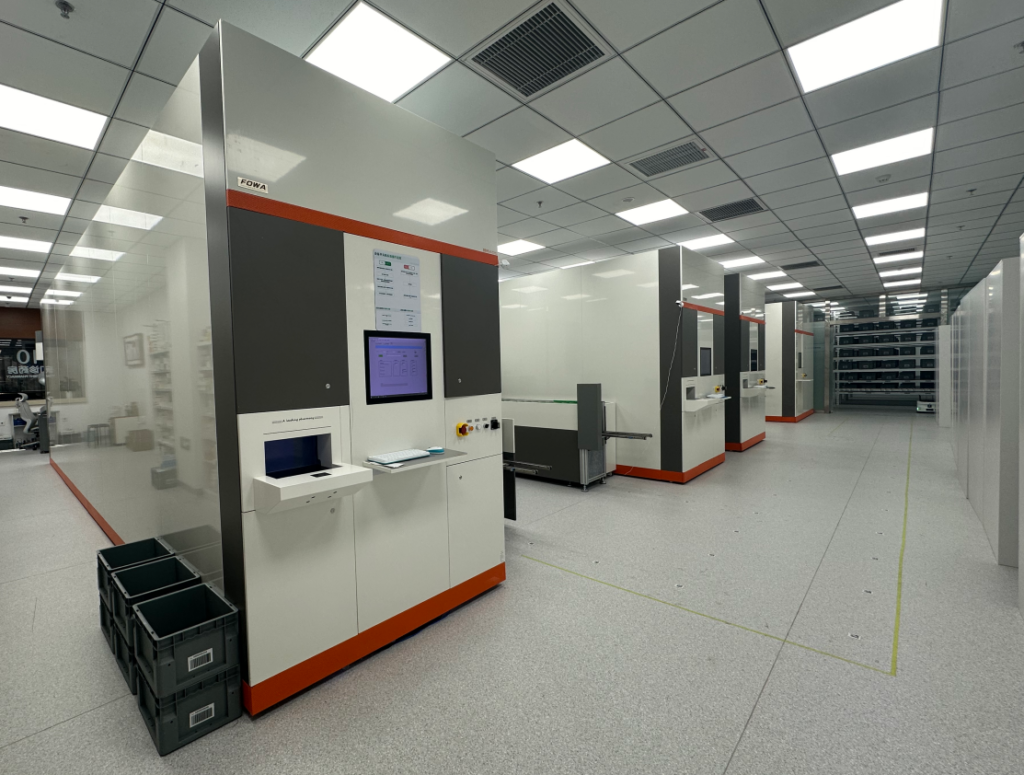
Discover how Fowa Medical’s automated dispensing machine cuts patient wait times by 90% and achieves a near-zero error rate. Compare robotic-arm vs. chute-type systems with real Tier-3 hospital data from Beijing Anzhen Hospital.
Fowa Intelligent Medical: Pioneering AI-Powered Smart Pharmacy Solutions
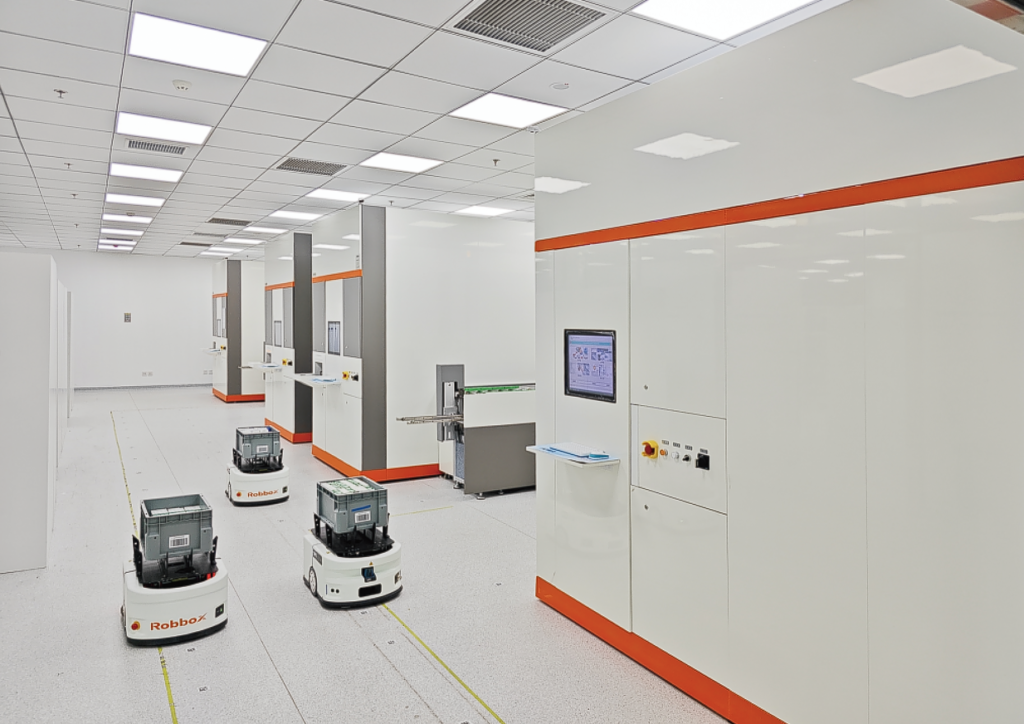
Fowa Intelligent Medical is a national high-tech enterprise pioneering AI-powered smart pharmacy solutions, including automated dispensing robots and warehouse systems.